A director calls “cut,” and within seconds a previs animatic shows exactly how the next shot will look before a single light is rigged. A marketing team turns a wrap-day photo into a full trailer teaser overnight. A voice test comes back from an AI tool sounding almost right, and “almost” is where the conversation about AI in film production usually starts. Everyone on a film set has an opinion about AI right now, and most of those opinions sit somewhere between excitement and unease. The honest answer is less dramatic than either: AI is already part of how films get made, and it is not the part doing the filmmaking.
The Fear Behind the Headlines
The worry is understandable. Every year brings a louder wave of AI tools that promise to write, animate, voice, or edit faster than a human crew, and it is easy to read that as a countdown to obsolescence. Concept artists, editors, and voice talent have watched AI generate rough versions of their work in seconds, work that used to take days. That is a real shift, and pretending otherwise would not be honest.
But a rough version is not a finished one, and speed is not the same as judgment. The gap between “AI can generate something in this direction” and “AI can make the creative decisions a production actually needs” is where the real conversation belongs.
Where AI Genuinely Helps Today
Used well, AI shortens the distance between an idea and something a team can react to. A few places where that shows up on a real production:
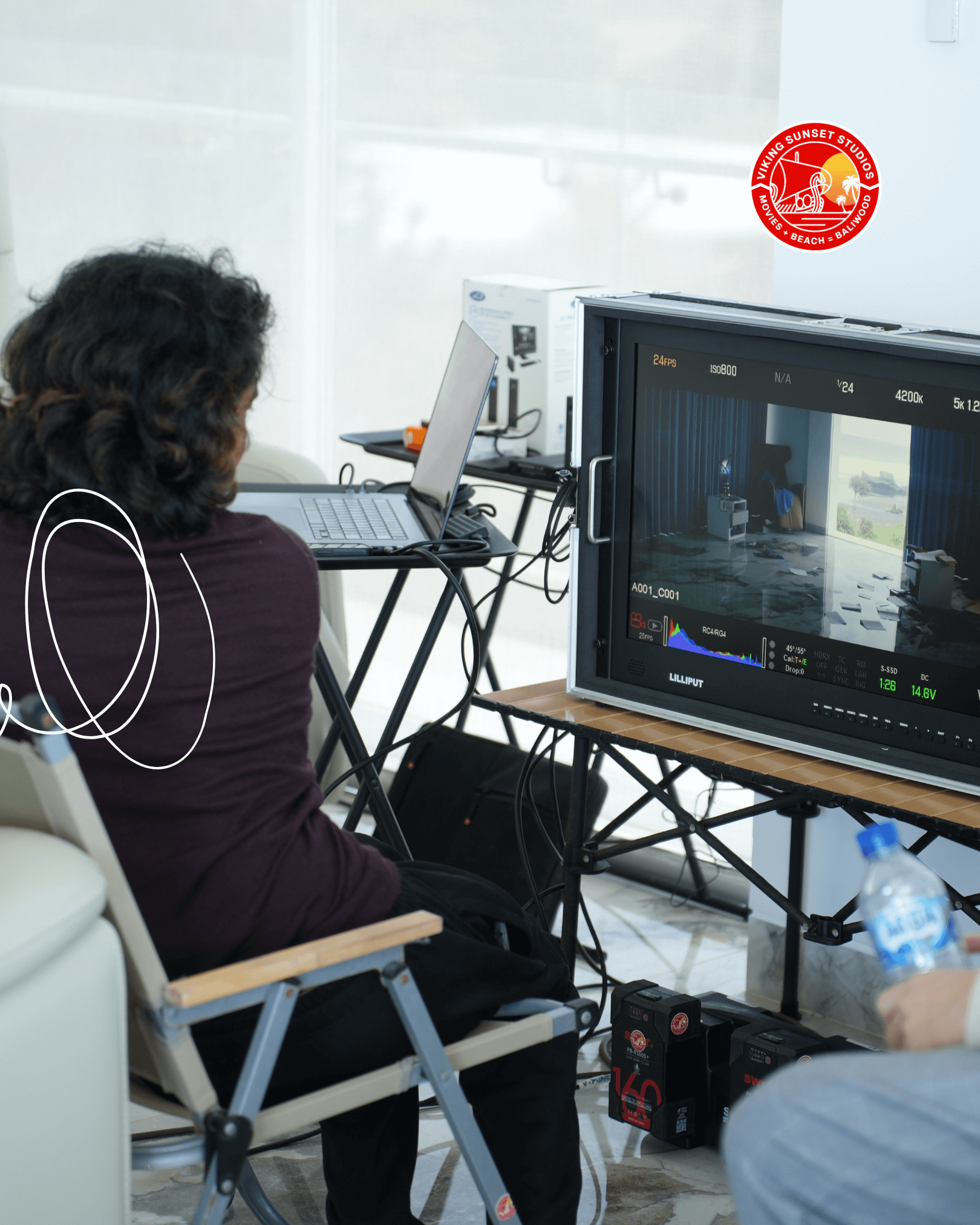
Previsualization. Before a scene is built or a location is booked, AI tools can turn a rough description or storyboard into a moving previs, giving directors and DPs something concrete to plan blocking and lighting around, instead of relying on imagination alone.
VFX assist. Rotoscoping, background cleanup, and rough compositing passes that used to eat hours of an artist’s day can now be sped up by AI-assisted tools, freeing the VFX team to spend their time on the shots that need a human eye.
Marketing assets. Teasers, social cuts, and promotional stills can be produced far faster with AI support, which matters most in the window right after a shoot wraps, when momentum is highest and a full post-production schedule is still weeks away.
At Viking Sunset Studios, this is not a hypothetical. Our team already works with tools like Higgsfield for rapid visual concepts, ElevenLabs for voice and audio drafts, and Adobe Firefly for fast image generation, using each one where it genuinely saves time, not where it replaces a decision that should stay with a person.
Where AI Still Falls Short
Anyone who has spent real time with these tools knows they still make mistakes, and not small ones. Hands and faces distort in generated footage. Continuity drifts between shots in ways a human eye catches instantly. AI voice can nail the words and still miss the breath, the hesitation, or the emotional weight a line needs, and the result often carries a certain flatness, a “vibe” that feels close to human work but not quite inside it. Audiences pick up on that gap even when they cannot name it.
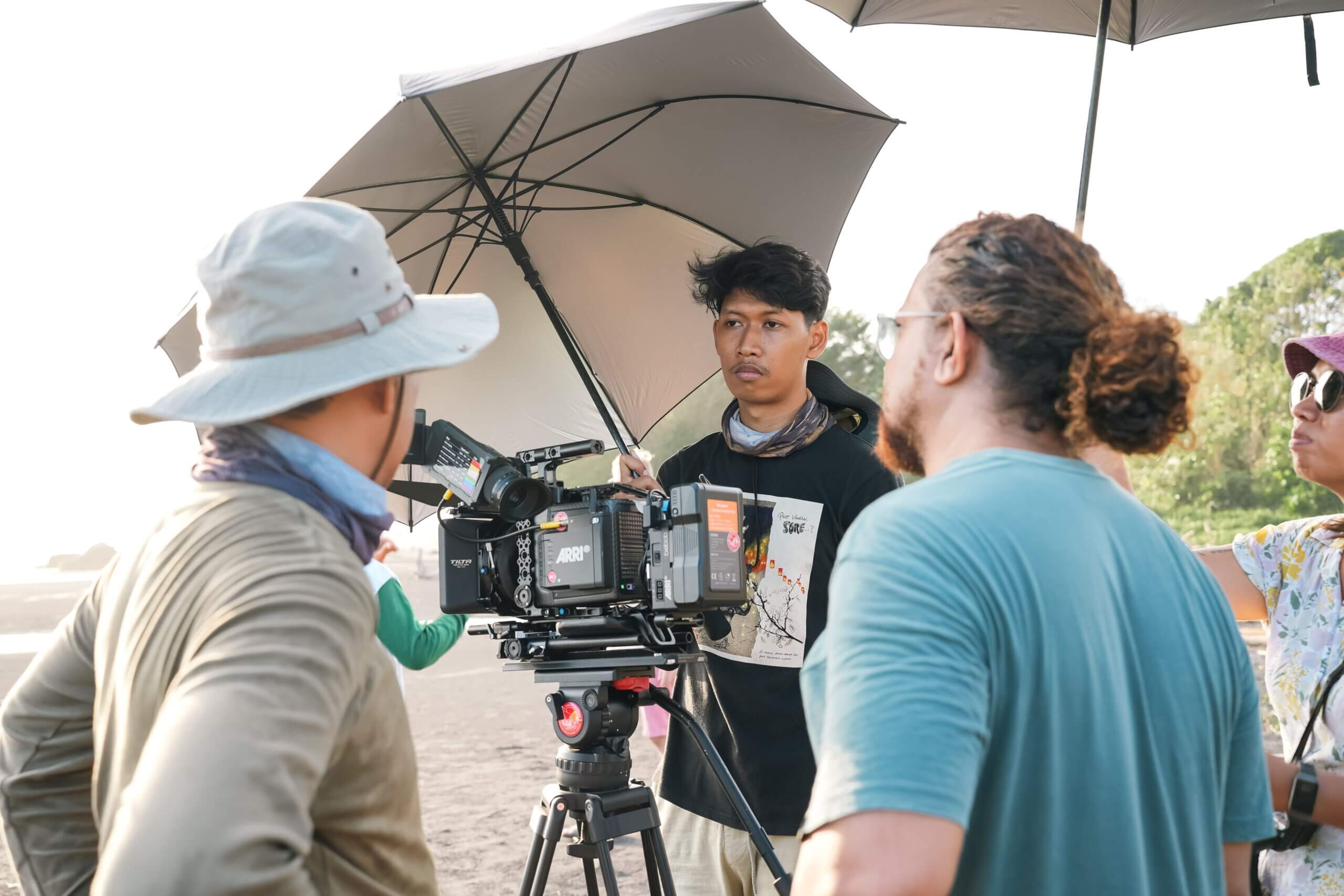
That gap is exactly where a production team earns its role. A director shapes a performance in ways no prompt can replicate, reading a room, adjusting a line reading, pulling something out of an actor that wasn’t in the script. An editor feels pacing, not just calculates it. A sound mixer knows when a scene needs three more seconds of silence to land. These are not tasks waiting for a faster tool; they are judgment calls built on experience, and that is the part of filmmaking AI is nowhere close to doing on its own.
AI as Assistant, Not Author
The clearest way to think about it: AI is a fast first draft, not a final decision. It compresses the distance between nothing and something, which lets a human team start reacting, refining, and directing sooner. It doesn’t compress the part of the job that actually requires taste, and it doesn’t replace the review process that catches an uncanny frame, an off voice line, or a shot that just doesn’t feel right yet.
The productions that get the most out of AI right now are the ones that use it exactly like that, as a tool that speeds up the parts of the process that were always mechanical, so the crew has more time for the parts that were never going to be.
Bring Your Production to Bali
Wherever AI fits into a workflow, the crew still has to run it, the director still has to shape it, and the studio still has to deliver it. Viking Sunset Studios brings together a soundproof soundstage, a production and fixer team on the ground in Tabanan, and a crew that knows exactly where a fast AI draft ends and real filmmaking begins. If you’re planning a production and want a team that treats new tools as a way to work smarter, not a way to cut corners, we’d love to talk.
Get in touch: info@vikingsunsetstudios.com
Tap to Follow Us
Instagram: @vikingsunsetstudios
TikTok: @vikingsunsetstudios
LinkedIn: Viking Sunset Studios
Visit: www.vikingsunsetstudios.com