82 million cinema admissions in 2024. A box office projected to reach 100
million within five years. The numbers are hard to ignore.
There is a moment in every emerging industry when the numbers stop being impressive
and start being undeniable. Indonesian cinema reached that moment some time ago,
and the rest of the world is only just beginning to catch up with what has been
happening here.
In 2024, Indonesian cinemas recorded 82 million admissions. Box office revenue
climbed from under 75 million US dollars in 2020 to approximately 392 million US
dollars four years later. The country now ranks among the top ten in the world for both
cinema attendance and film production output. And projections suggest the 100 million
admission mark is not a question of whether, but when.
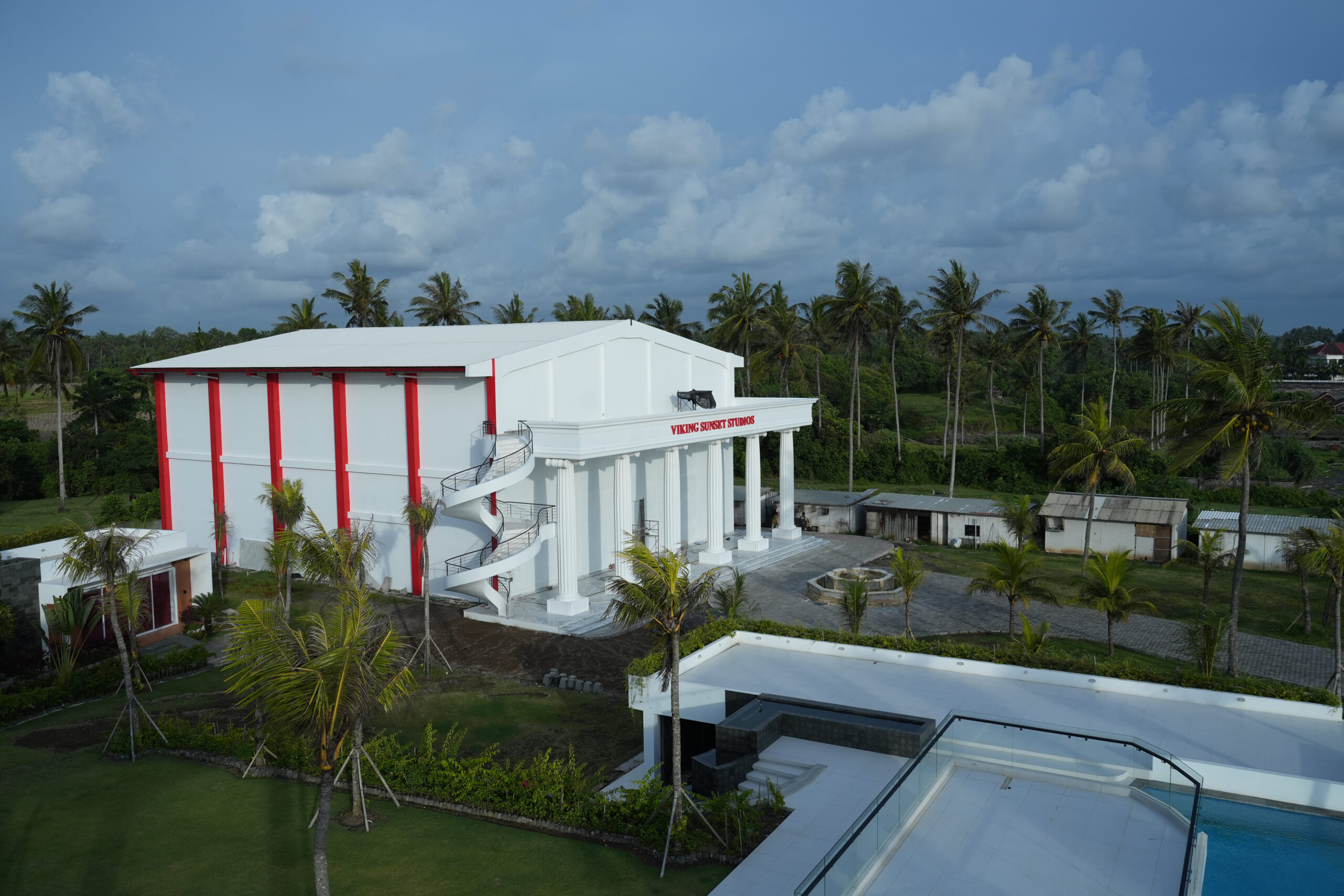
For anyone working in film production in Southeast Asia, and for the team at Viking
Sunset Studios based in Bali, this is not background noise. It is the context in which
every production decision we make is set.
The Recovery That Became a Boom
Indonesian cinema, like every other film industry on the planet, took a serious hit during
the pandemic years. Theatres closed. Productions stalled. The industry held its breath.
What happened next was not a recovery. It was an acceleration. The pent-up appetite
for cinema-going, combined with a run of genuinely strong local productions, drove
audiences back to theatres faster and in greater numbers than most analysts had
predicted. Revenue more than quintupled between 2020 and 2024. That is not a postpandemic bounce.
That is a structural shift in how Indonesians engage with cinema.
The pipeline is keeping pace too. Film production in Indonesia is projected to reach
around 200 titles per year within the next few years, which would put it among the most
productive film industries in Asia. The growth is happening on both sides
simultaneously: more films being made, and more people going to watch them.
Local Films Are Winning at Home
One of the most telling statistics in the Indonesian film industry right now is this: local
productions accounted for approximately 65 percent of national box office share in
2024. The top ten Indonesian films that year collectively drew over 33 million
admissions on their own.
That number matters because it tells you something important about the relationship
between Indonesian audiences and Indonesian stories. Audiences are not going to local
films because foreign alternatives are unavailable. They are choosing them. Films that
are rooted in Indonesian culture, shot in Indonesian locations, and told in a voice that
feels authentic to the country they are made in are consistently outperforming imported
competition.
Titles like Agak Laen and Siksa Kubur are part of a generation of Indonesian films that
have pushed the creative boundaries of what the local industry can do. They are
inventive, they are funny or frightening in ways that feel specific rather than generic, and
they are finding massive audiences as a result. That creative ambition is what is driving
the numbers, not just marketing budgets or distribution muscle.
Horror Is the Engine, But the Genre is Evolving
If you want to understand Indonesian cinema commercially, you have to understand
horror. The genre has dominated the local box office for well over a decade. Roughly
half of the highest-grossing Indonesian films since 2011 have been horror productions,
and that consistency is not accidental. Indonesian horror draws on a rich tradition of
folklore, spirituality, and local mythology that resonates deeply with domestic audiences
in a way that imported horror rarely can.
What is interesting is what is happening to the genre now. Pure horror is increasingly
giving way to hybrid approaches: horror-comedy, horror-drama, supernatural thriller with
social commentary woven through it. These combinations are expanding the audience
for what used to be a fairly niche genre internationally, and they are producing films that
are starting to travel beyond Indonesian borders in a way the industry has not always
managed.
The creative flexibility that comes from genuinely knowing your audience, knowing what
they fear and what makes them laugh and what they want to talk about after the lights
come up, is something that takes years to develop. Indonesian filmmakers have it. That
is a real competitive advantage.
The Structural Challenges Are Real
None of this means the Indonesian film industry does not have problems. It does, and
they are worth being honest about.
Screen density is the most obvious one. Indonesia currently has approximately 7.7
screens per million people, which is low by any regional comparison. The majority of
those screens are concentrated on Java, meaning that a significant portion of the
Indonesian population has limited or no practical access to cinema. For a market
projecting 100 million admissions, that infrastructure gap is a real ceiling on growth.
Distribution is the other structural issue. The absence of strong independent distributors
means that producers often carry the full weight of marketing risk themselves, and a
film’s commercial fate can effectively be decided in its opening weekend. That creates
pressure toward safe, proven formulas and away from creative risk-taking, which is
precisely the opposite of what has been driving the industry’s most successful recent
work.
These are solvable problems. Policy reform, investment in regional exhibition, and the
development of a proper distribution ecosystem would address most of them. Whether
that investment arrives fast enough to match the pace of growth is the question the
industry is genuinely grappling with right now.
The Economic Footprint Is Already Substantial
It is worth stepping back from the box office figures for a moment and looking at what
the film industry actually contributes to the Indonesian economy as a whole. The
sector’s contribution to GDP sits at approximately 5.1 billion US dollars, and it supports
close to 400,000 jobs across production, distribution, exhibition, and the wider creative
ecosystem that surrounds it.
Those numbers put film in a different category from a leisure industry. They make it a
strategic sector, one with genuine multiplier effects across tourism, hospitality,
technology, fashion, and music. Every film shot in Indonesia, whether by a local
production company or an international one coming in from outside, generates
economic activity well beyond the production itself.
For Bali specifically, this is particularly relevant. The island has long been one of the
most filmed locations in Southeast Asia, and the growth of the wider Indonesian industry
creates both a larger domestic market for Bali-based production facilities and a stronger
argument for international productions to consider Indonesia as a serious destination
rather than just a beautiful backdrop.
What This Means for Film Production in Bali
Bali sits at an interesting intersection within all of this. It is part of Indonesia’s expanding
film ecosystem, with access to the talent, infrastructure, and creative energy that the
wider industry is generating. At the same time it has always had a distinct identity as a
production destination in its own right, drawing international projects because of its
landscapes, its culture, and the quality of creative work that gets produced here.
As the Indonesian industry grows and professionalises, the case for building serious
production infrastructure in Bali becomes stronger. That is exactly the logic behind
Viking Sunset Studios. We are not a facility that exists in isolation from the wider
industry. We are part of a growing ecosystem, one that is becoming more interesting to
the global film community with every year that passes.
The trajectory of Indonesian cinema over the next decade is going to be one of the
more compelling stories in the global film industry. We intend to be a meaningful part of
it.
Bring Your Next Production to Bali
Located in Tabanan, Bali, Viking Sunset Studios is an international creative
production hub offering world-class facilities for film, commercial, and content
production. From our soundproof green screen studio and professional equipment to
stunning natural backdrops including beach, rice terraces, jungle, cave and temple,
everything you need is in one place.
Whether you are scouting for a film studio in Bali, looking for a production partner in
Southeast Asia, or searching for locations for movies filmed in Bali, we would love to
hear about your project.
Get in touch: info@vikingsunsetstudios.com
Follow us: @vikingsunsetstudios on Instagram and TikTok
Visit: vikingsunsetstudios.com