Every set has the same moment. The camera is ready, the actors are in position, the lighting is exactly where the director wants it, and someone calls for quiet. Then a rooster crows somewhere beyond the wall, or a scooter passes on the road, or rain starts drumming on the roof. The take is gone, and so is another ten minutes of a full crew’s day. Soundstage soundproofing rarely makes it into a location brochure, and it never appears in the frame. Yet it shapes everything that does: the quality of the dialogue, the length of the schedule, and how much of the final mix has to be rebuilt later.
What Soundstage Soundproofing Actually Does
Soundstage soundproofing is what keeps the outside world out of your microphones. Traffic, wind, weather, aircraft, and distant construction all travel through walls and roofs far more easily than most people expect, and a stage that isn’t built to stop them will pick up every one of them.
It helps to separate two ideas that often get mixed together. Soundproofing blocks sound from passing through the building’s walls and roof. Acoustic treatment shapes how sound behaves inside the room, controlling echo and reflections. A professional soundstage needs both, but the first one comes first: no amount of interior treatment can remove noise that has already entered the room.
The industry measures this with Noise Criteria (NC) ratings, which describe how much background noise is left inside a space. The lower the number, the quieter the room. An NC20 target is very low, in the range used for recording studios and other spaces built for critical listening, and it is the kind of number a sound mixer wants to hear before a production commits to a stage.
The Real Cost of Poor Soundproofing on Set
Bad sound is rarely expensive on the day. It is expensive afterwards. On set, ambient noise means ruined takes. Each one costs time while the full crew stands by, and each interruption breaks the rhythm of a performance. Noise that slips through unnoticed becomes a continuity problem, because a sound that exists in one take and not in the next is very hard for an editor to hide.
In post-production, the fallback is ADR (automated dialogue replacement), where actors re-record their lines in a studio, matching their own lip movements from memory. It works, but it is slow, it needs actors who are still available, and many directors will tell you that a re-recorded line rarely carries the same feeling as the one delivered on set. Noise-reduction software can rescue some audio, but heavy cleanup can leave the voice sounding thin or processed.
And in the worst case, the scene is reshot. On a large production, that means paying again for the crew, the stage, the lighting, and the schedule. When the footage is headed for visual effects work in post, the cost stretches further, because every repeated take adds to the chain of work waiting behind it.
Why a Soundproof Film Studio Matters Even More in Bali
Bali is beautiful, and it is also loud. Tropical rain can be intense, wildlife never keeps to the call sheet, the coastline is never silent, and the island’s ceremonies and daily life keep going whether or not a camera is rolling. That is part of what makes it such a rich place to film outdoors, and part of the reason international productions are choosing Bali. It is also why a truly controlled indoor space is so valuable.
A soundproof film studio gives a production a reliable alternative. Shoot the beach or the rice terraces in the morning, then move indoors in the afternoon to a space where the weather and the neighborhood can’t reach the microphones. The schedule stays predictable, and dialogue-heavy scenes can be shot without gambling on the day’s conditions.
Studio L: A Soundproof Soundstage in Bali Built for Clean Audio
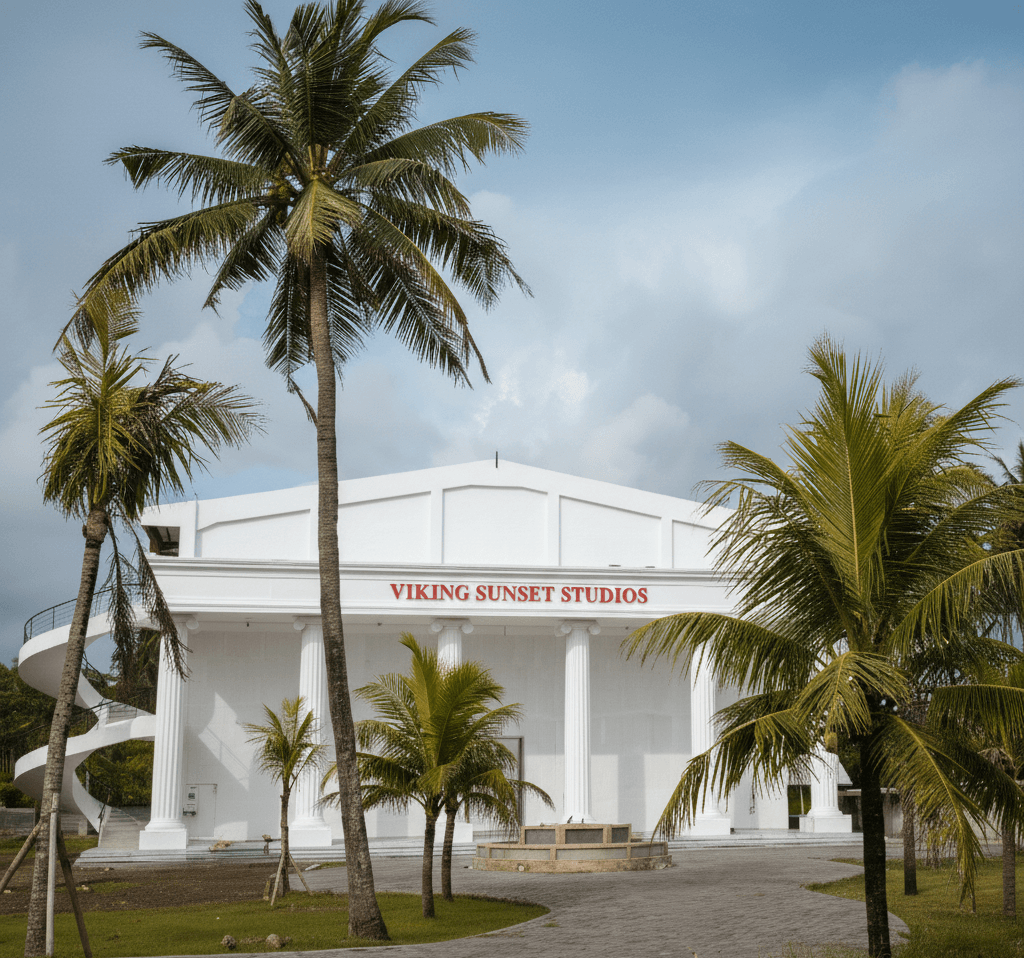
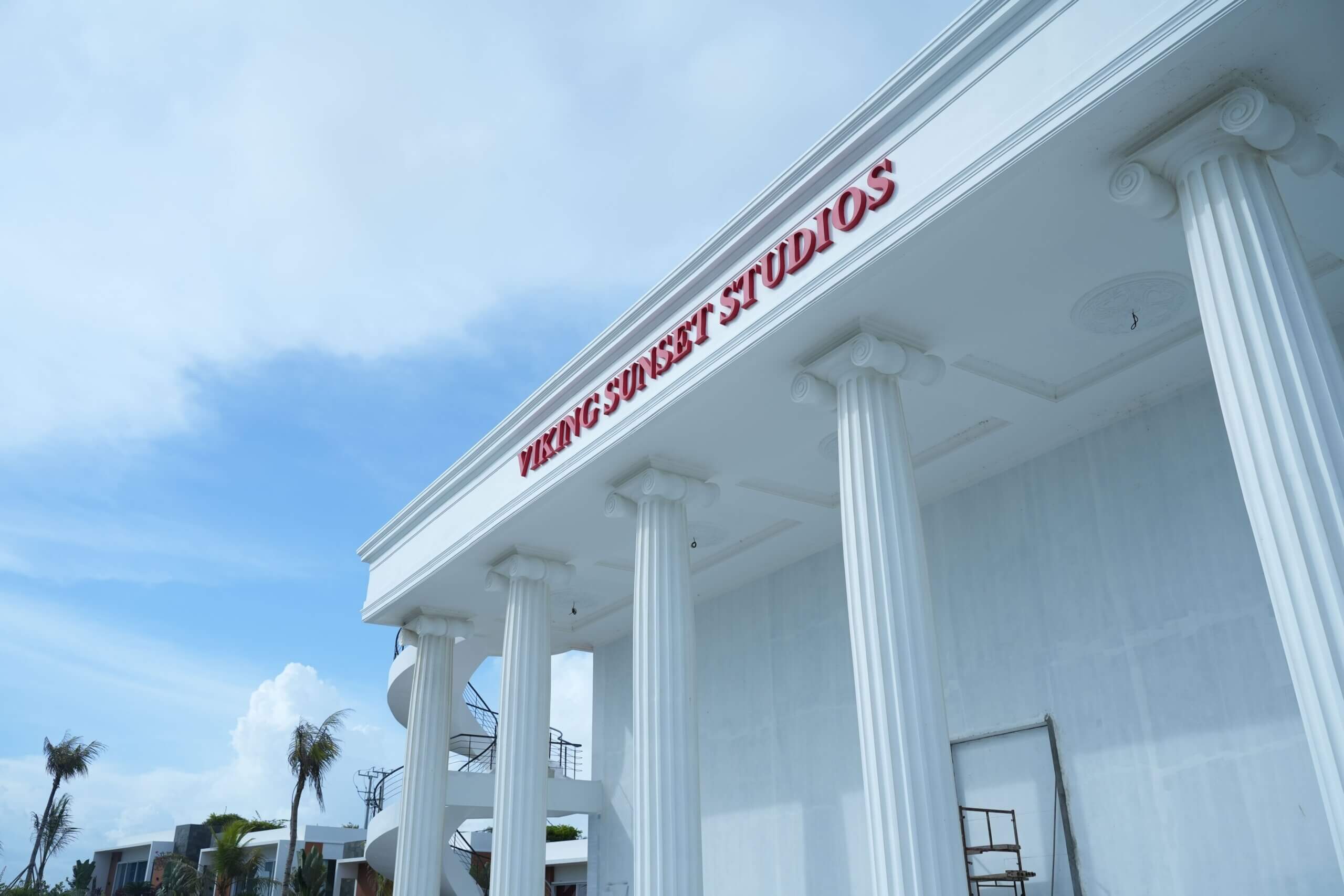
At Viking Sunset Studios’ campus in Tabanan, this is the role of Studio L, a large indoor studio designed for film, TV, and commercial shoots. It is a soundstage with certified soundproofing, and its NC20 soundproofed walls give productions the kind of controlled audio environment that dialogue-driven work depends on. As a soundstage in Bali, it pairs that quiet with the practical tools a large set needs, including full-access rigging rails and an indoor crane.
The sound kit sits in the same inventory as the stage. Viking Sunset Studios’ film equipment in Bali includes a boom mic set, a Rode NTG4+, a Zoom H-6 handheld recorder, and Rode Wireless GO II units.
Around the stage, the campus has what a working production needs: on-site production offices, a makeup and wardrobe room, and bungalows and a beach villa for cast, producers, and clients. Add a local film fixer team in Bali for permits and locations, and the result is a soundproof stage that works as part of a complete production base, not as a standalone room.
Questions to Ask Before Booking a Soundstage
Not every stage that calls itself soundproof performs the same way. Before committing, ask what the stage’s rated background noise level is and how it was measured. Ask how the space holds up during heavy rain, and what noise the power, lighting, and ventilation systems add while the stage is in use. If possible, let your sound mixer test the room before the shoot. A studio that welcomes these questions is usually one that has already done the work.
Bring Your Vision to Bali
Great sound is one of the quietest ways a production shows its quality. If you are scouting Southeast Asia for your next feature, series, or commercial, Viking Sunset Studios brings together a soundproof film studio with certified soundproofing, diverse natural backdrops, and a full production and fixer team in Tabanan, Bali. We’d love to hear what your production needs, and show you what it takes to bring your vision to life here.
Get in touch: info@vikingsunsetstudios.com
Tap to Follow Us
Instagram: @vikingsunsetstudios
TikTok: @vikingsunsetstudios
LinkedIn: Viking Sunset Studios
Visit: www.vikingsunsetstudios.com